If you are drawn to Bay Head, chances are you are not just shopping for square footage. You are looking for a home that fits the way you want to spend your time, whether that means long porch evenings, easy beach access, or a house that can hold generations under one roof. In Bay Head, architecture and daily life are closely linked, and understanding that connection can help you buy with more clarity. Let’s take a closer look.
Why Bay Head Feels Distinct
Bay Head has a strong architectural identity that still shapes the town today. According to the borough’s master plan, the historic district spans about 52 blocks and includes 649 primary buildings, 228 secondary buildings, and notable sites such as the Bay Head Yacht Club and Howe Park.
That history is visible in the housing stock. The same plan reports that 47.5% of homes were built in or before 1939, and 82% were built in or before 1979. Roughly 90% of the borough’s housing was single-family detached in the 2014 ACS snapshot, which helps explain why Bay Head feels residential, low-rise, and consistent in character.
Bay Head’s Environmental Resource Inventory describes the borough as a coastal summer resort from the late 19th century through the beginning of World War II. It also notes that Shingle Style is the dominant historic style, making Bay Head one of New Jersey’s strongest collections of Shingle Style homes.
That seasonal heritage still matters. The 2014 ACS snapshot showed 574 seasonal or occasionally used housing units compared with 459 occupied units, which helps explain why so much of Bay Head living centers on weekends, summers, and family gatherings.
Shingle Style and Shore Living
Why Shingle Style Feels So Bay Head
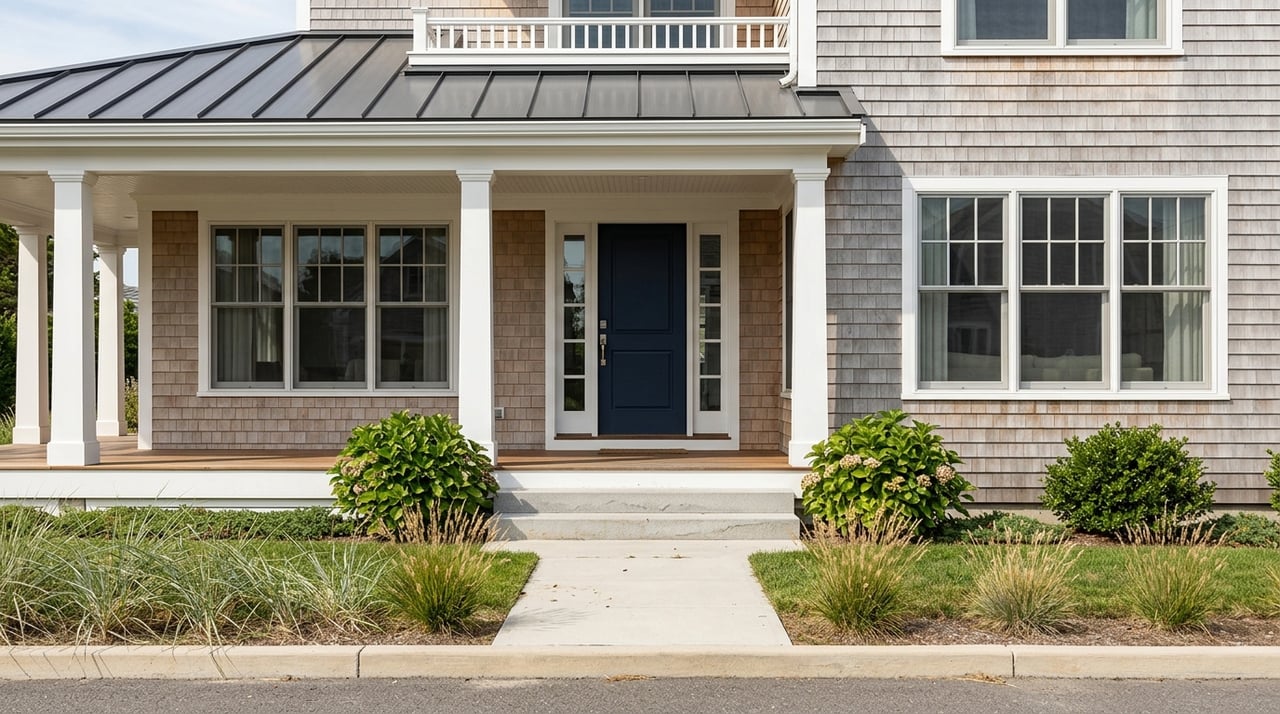
If you picture a classic Bay Head home, you are probably picturing a Shingle Style house. This style is known for complex forms wrapped in a smooth wood-shingle exterior, with asymmetrical massing, broad porches, and relatively little applied ornament.
In a shore town, those features tend to support a relaxed rhythm of life. Porches become part of the living space, outdoor transitions feel natural, and the house often feels designed for gathering rather than formality.
Because Shingle Style reached some of its strongest expression in seaside resorts, it fits Bay Head’s history especially well. For many buyers, this is the style that feels most connected to the borough’s coastal identity.
Who This Style Often Appeals To
Shingle Style homes often speak to buyers who want:
- A classic shore-house look
- Strong indoor-outdoor flow
- Covered porch space for dining or relaxing
- A home that feels rooted in Bay Head’s resort history
If you want your home to feel easygoing and beach-oriented, this style is often the natural starting point.
Stick Style and Queen Anne Character
What Makes These Homes Stand Out
Stick Style and Queen Anne homes bring more visual variety. Stick Style houses are often asymmetrical with steep roofs, decorative trusses, and generous porches. Queen Anne homes typically include varied wall planes, bays, towers or turrets, and wraparound porches.
In practical terms, these homes can feel more expressive from the street and more individual from house to house. They often attract buyers who enjoy the personality that comes with older architecture.
The Lifestyle They Suggest
These styles tend to suit buyers who value charm and distinction over uniformity. You may be drawn to them if you like homes with room-by-room character, memorable exterior details, and a streetscape that feels layered and visually rich.
In Bay Head, that can translate into a more personal and distinctive homeownership experience. No two houses feel exactly the same, and that uniqueness is often part of the appeal.
Colonial Revival and Dutch Colonial Revival
A More Traditional Feel
Not every Bay Head buyer wants a cottage-like look. Colonial Revival and Dutch Colonial Revival homes often offer a more orderly style language, with symmetry, classical details, multi-pane windows, and in some cases gambrel roofs or second-story overhangs.
These homes can feel a bit more settled and all-season in character. They are still part of the coastal setting, but they often read as more traditional and structured than a classic shingle cottage.
What Buyers Often Like About Them
If you are looking for a home that feels familiar, balanced, and practical for year-round use, this style may stand out. Many buyers connect with the calmer appearance and more traditional layout cues.
This can be a strong fit if you want Bay Head’s coastal setting without leaning too far into a purely summer-house aesthetic.
Larger Coastal Homes and Rebuilds
Space Meets Resilience
Bay Head’s housing story also includes larger coastal homes, renovated properties, and post-Sandy rebuilds. The borough’s master plan says many older homes damaged by Superstorm Sandy were restored rather than removed, which helped preserve the town’s historic character.
At the same time, new and substantially altered homes must be raised in accordance with FEMA flood guidelines. The borough also encourages pervious materials, green space, and other runoff-reducing measures.
What That Means for Daily Use
For you as a buyer, this often means weighing lifestyle and site planning together. A larger home may offer more room for guests, storage, and flexible living, but in Bay Head it may also reflect careful decisions about elevation, drainage, outdoor surfaces, and storm resilience.
That balance matters if you are comparing a restored older home with a newer or substantially updated property. Both can work beautifully, but they may support daily life in different ways.
Location Shapes Lifestyle Too
Beach, Bay, Lake, and Village Access
In Bay Head, home style is only part of the story. Block-by-block location can have a major effect on how you use the property.
The borough says its beaches are open to the public and operated independently by the Bay Head Improvement Association. Its public-access plan covers the Atlantic Ocean, Scow Ditch, Barnegat Bay, Twilight Lake, and Bay Head Harbor.
That means one home may support a beach-centered routine, while another may feel more connected to the lake, harbor, or village center. Two houses with similar architecture can create very different day-to-day experiences depending on where they sit.
Walkability and Getting Around
Bay Head has also emphasized pedestrian and bicycle movement through its Complete Streets policy. For buyers who want options beyond the car, that can be meaningful.
NJ Transit’s Bay Head Station offers parking plus bike racks or lockers on the North Jersey Coast Line. NJ Transit also states that the line provides direct service to Penn Station New York, with shuttle service between Bay Head and Long Branch requiring a train change at Long Branch.
If you expect to use the train or prefer a more walkable routine, location should be part of your early search criteria.
Seasonal Traffic and Parking Reality
Bay Head’s coastal lifestyle also comes with seasonal patterns. The borough permits parking on oceanfront street ends except between 8 p.m. and 6 a.m., and it enforces seasonal parking restrictions on Mount Street, Main Avenue, Bridge Avenue, Park Avenue, and Lake Avenue.
For some buyers, that is simply part of living in a shore community with summer activity. It is helpful to understand those rhythms early so you can choose a location that matches your comfort level and daily habits.
How to Match the Home to Your Lifestyle
Questions Worth Asking Early
When you begin your search, it helps to think beyond style names and focus on how you actually want to live in Bay Head. A beautiful house is only the right house if it supports your routine.
Here are a few useful questions to ask:
- Do you want a porch-centered summer home feel?
- Are you looking for a more traditional year-round house?
- How important is beach, lake, harbor, or village access?
- Do you prefer historic character or updated storm-aware construction?
- How much exterior upkeep are you comfortable taking on?
- Will you need space for guests, storage, or multigenerational use?
A Simple Style-to-Lifestyle Guide
Shingle Style and classic shore cottages often fit buyers who want a relaxed, porch-driven coastal rhythm.
Stick Style and Queen Anne homes often appeal to buyers who value individuality, expressive architecture, and historic detail.
Colonial Revival and Dutch Colonial Revival homes often suit buyers who want a more traditional and settled feel.
Larger coastal homes and renovated rebuilds often attract buyers who prioritize gathering space, storage, elevated construction, and storm-aware planning.
Why Local Insight Matters in Bay Head
Bay Head is the kind of market where broad descriptions only go so far. The style of the home matters, but so do elevation, access, seasonal patterns, and the subtle differences from one block to the next.
That is especially true if you are buying from outside the area, looking for a second home, or trying to compare older properties with updated coastal homes. Knowing how a house lives, not just how it looks, can make your decision much easier.
If you want help sorting through Bay Head home styles, location trade-offs, or the feel of one section of town versus another, Suzie & Ed, Diane Turton, REALTORS® can help you navigate the market with practical local guidance.
FAQs
Which home style feels most like classic Bay Head?
- Shingle Style is often the style most closely associated with Bay Head, and the borough’s planning documents identify it as the dominant historic style in town.
Are many Bay Head homes historic?
- Yes. The borough’s master plan reports that 47.5% of homes were built in or before 1939, and 82% were built in or before 1979.
What does Bay Head’s housing mix look like?
- The 2014 ACS snapshot in the borough’s master plan says roughly 90% of Bay Head’s housing was single-family detached.
How important is location within Bay Head when buying a home?
- Very important. Access to the ocean, bay, lake, harbor, village center, and train station can vary by block and can shape how you use the home.
Do newer or rebuilt Bay Head homes need to account for flooding?
- Yes. The borough’s master plan says new and substantially altered homes must be raised in accordance with FEMA flood guidelines.
Is Bay Head geared more toward seasonal living or year-round living?
- Bay Head supports both, but the borough’s housing data includes a large number of seasonal or occasionally used units, which reflects the town’s long-standing summer-resort character.