Twilight Lake sits at the center of town, but most of what makes it interesting is a few hundred feet to its north, inside a working NJ Transit rail yard that most people drive past without a second look. That's where a resident on a walk is most likely to spot an osprey. It's an odd place for wildlife to gather, and that's exactly what makes it worth knowing about if you already live here and think you've seen everything the loop around the lake has to offer.
Bay Head is small enough that most people describe getting around it in terms of bikes rather than blocks. Riding a bike is the only reliable way to move through town, and the reason has less to do with distance than with water. Twilight Lake and Scow Ditch cut through the middle of Bay Head, and the way the town is actually laid out determines which side of that water you're standing on more than which street you're closest to.
A Lake That Splits the Town
Twilight Lake and Scow Ditch form a saltwater estuary that functions as Bay Head's connection to Barnegat Bay. The lake overlooks Town Center and has long been used for birdwatching, evening walks, and bike rides timed to catch the sunset over the water. It looks like a park amenity. It behaves more like a boundary.
Town Center, with its Main and Bridge Avenue shops, sits on one side. The NJ Transit rail yard, the last stop on the North Jersey Coast Line, sits on the other. Everything between them is water that rises and falls with the tide, which matters more than it sounds like it should, because it shapes what can and can't be built across it.
A Sanctuary Built Into a Working Rail Yard
In 2009, NJ Transit partnered with the Borough of Bay Head and the New Jersey Audubon Society to turn part of that rail yard into a nesting site. Osprey platforms went up between the rail yard's employee parking lot and Twilight Lake, positioned so they're visible from Twilight Road and Lake Avenue. Wood duck and eastern screech owl boxes went into the woods inside the track loop itself, an area closed to the public because trains still run through it. Bay Head volunteers built the boxes and platforms. NJ Transit's own rail operations crew installed them.
Nothing about that setup announces itself. There's no trailhead, no sign pointing visitors toward it. The birds are living in the buffer zone of an active commuter line, which means the best sightlines in town belong to whoever happens to be standing on Twilight Road or Lake Avenue at the right moment, not to anyone hiking a marked trail.
The Bridge Between Two Sides
Because the lake and ditch separate Town Center from the rail yard and the north end of town, getting from one side to the other has always meant crossing at a specific point rather than walking a straight line. One of those crossings is the Mount Street foot bridge, right next to where the Bay Head Beach Association keeps its building on Lake Avenue. Locals also cross by bike to reach the town park and the public tennis courts, using bridges that exist for exactly that purpose.
What doesn't exist yet is a direct link between downtown and the train station across the water. A local nonprofit, Bay Head Momentum, has proposed a quarter-mile pedestrian walking bridge spanning Twilight Lake to connect Town Center to the station directly. It's an idea, not a project underway, and the group's own description of the site explains why it isn't simple: because both the lake and Scow Ditch are tidal estuaries, any launch point or crossing has to be built to handle rising and falling water levels without eroding the shoreline or disturbing the habitat that's already there, including the nesting boxes at the rail yard. Until something like that gets built, the walk from downtown to the station, and back, still runs the long way around.
Where the Loop Ends
The loop that does exist closes at Centennial Park, tucked behind Borough Hall on Bridge Avenue under a stand of weeping willows. It has a playground and municipal tennis courts, the kind of quiet green space a town this size gets exactly one of. What's changed more recently is what's layered onto those tennis courts. Four movable pickleball nets now share the space with the permanent tennis nets, giving the park four dedicated pickleball courts that residents can reserve through a community pass app, free of charge. It's the same footprint it's always had, just asked to do more.
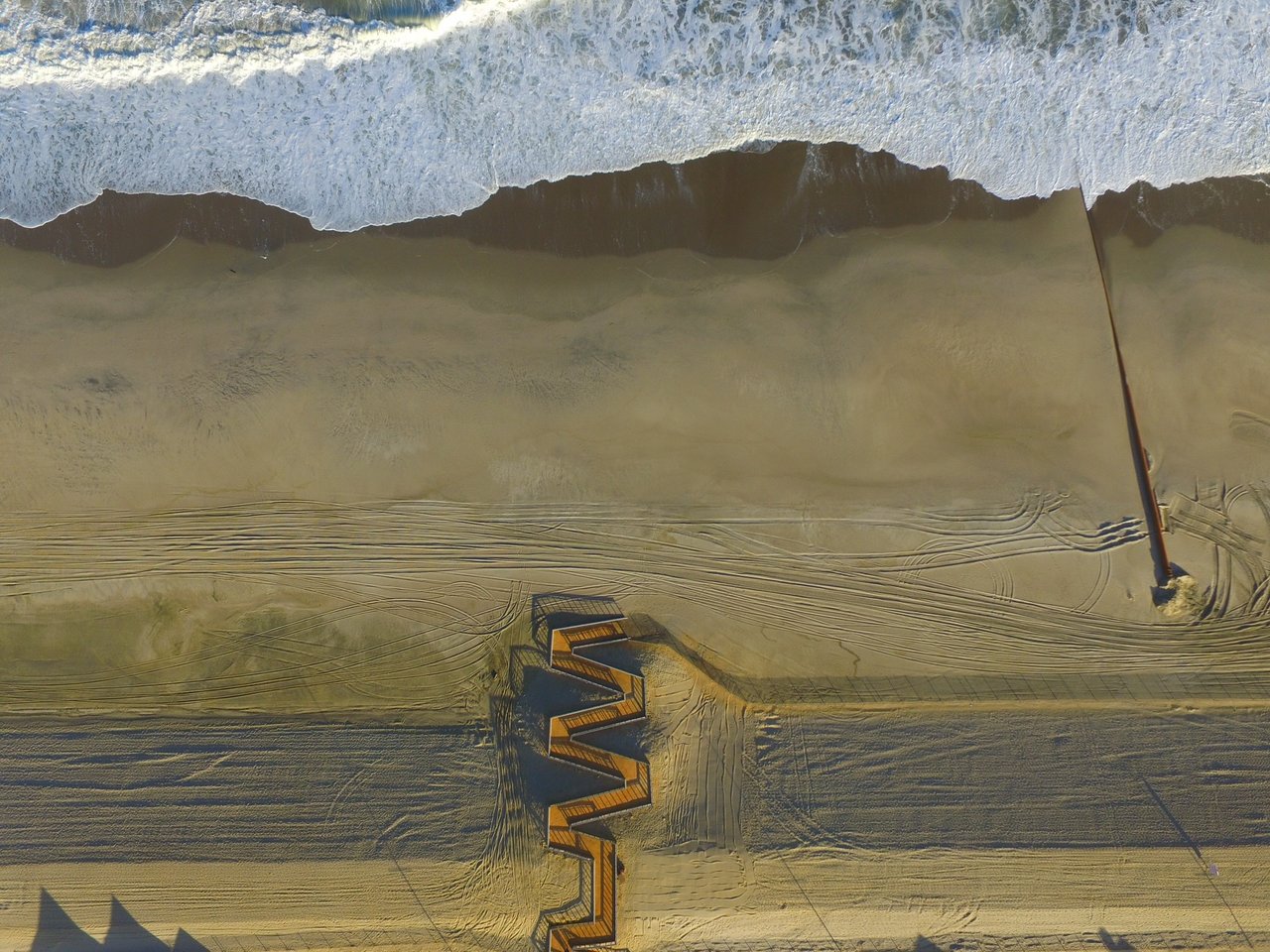
From there, the walk finishes at the beach and the boardwalk, and the boardwalk is where Bay Head's whole approach to itself becomes explicit. Longtime Mayor Bill Curtis put it plainly when describing what the town has chosen not to have, as reported by Industry: "there's no honky-tonk, no bars and no loud noises." That's not an accident of geography. It's the same logic that put osprey platforms next to a rail yard instead of clearing them a quieter spot further from the tracks, and the same logic that's slowing down a pedestrian bridge until it can be built without disturbing a tidal estuary. Bay Head tends to build around what's already there rather than replace it.
None of this is new information to anyone who's lived here a while. The rail yard has had its nesting boxes since 2009. The tennis courts have had pickleball lines for a while now. The bridge across the lake is still just a proposal on a nonprofit's website. But strung together, from the water that splits the town, to the birds nesting in a train yard, to a bridge that hasn't been built yet, to a park that added a sport without adding acreage, it's a version of Bay Head that doesn't show up in a single walk. It only shows up when you notice how much of the town's shape comes down to where the water is and isn't crossed.
If you're curious what else is tucked into corners of town you drive past every day, that's the kind of local detail Suzie & Ed tend to know off the top of their heads. Ask them next time you see them on Bridge Avenue.