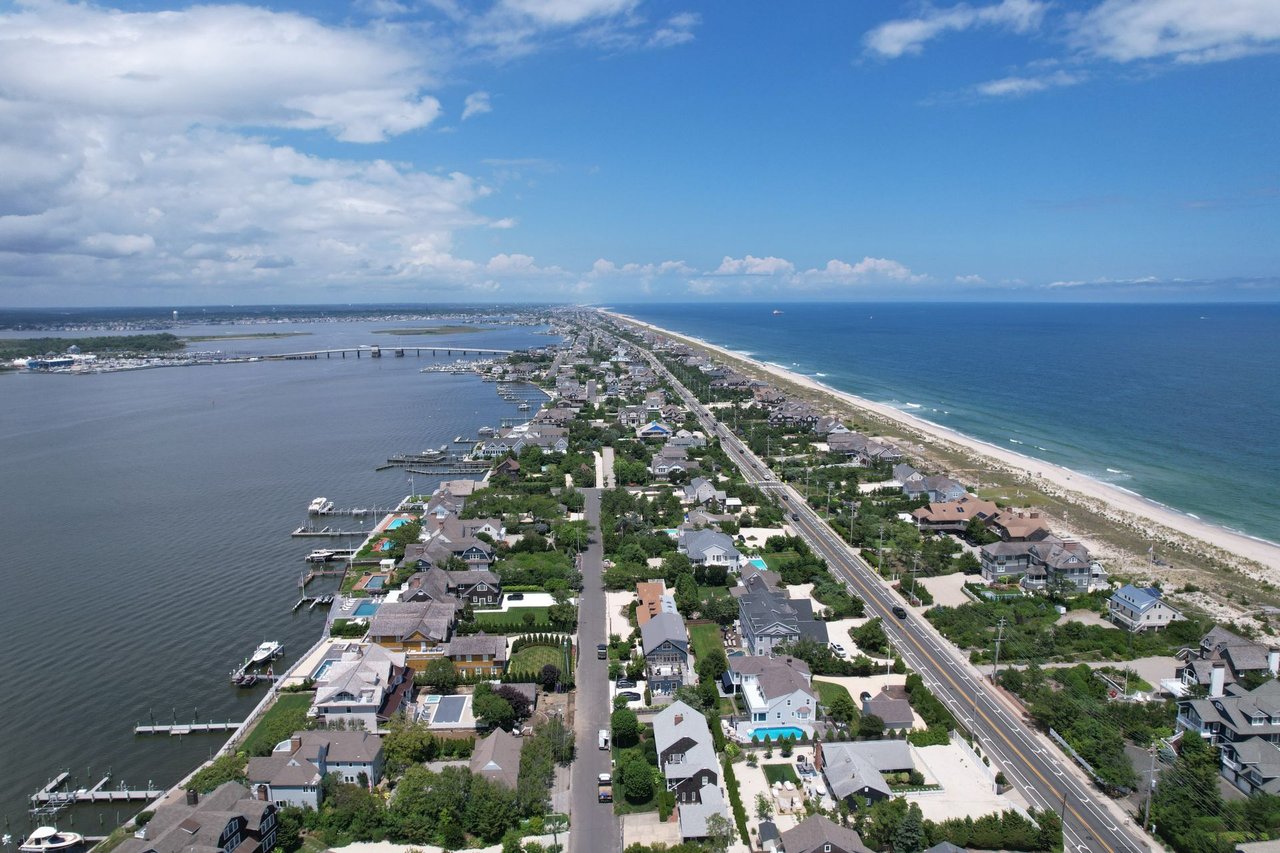
If you have looked at homes in Mantoloking, you already know one thing: two properties that seem close on a map can offer very different waterfront lifestyles. In a small barrier-beach town with limited inventory, the difference between oceanfront, bayfront, lagoon-front, and interior streets near public access can shape how you use the home, what you maintain, and what you need to verify before you buy. This guide will help you understand how Mantoloking’s waterfront micro-markets really work so you can compare properties with more confidence. Let’s dive in.
Why Mantoloking Feels So Segmented
Mantoloking is a small, fully developed single-family residential borough in Ocean County with about 2.2 miles of oceanfront and about 3.0 miles of bay shoreline. Borough planning materials describe roughly 498 housing units, with about 90% of land use tied to single-family detached homes and only a very small commercial footprint.
That matters because buyers are not choosing among large subdivisions or broad neighborhood types. In Mantoloking, homes are often judged more by frontage, access, and water orientation than by a typical neighborhood label. A street name, point, lagoon location, or shoreline position can say more about a property than a broad map pin.
Public access also plays a major role in how the market functions. Borough materials note 14 ocean access points, bayside street-end access, beach ramps and walkways, seasonal bathrooms, and a kayak or small-watercraft launch area. That means your experience of being “near the water” may come from direct private frontage, nearby municipal access, or a public easement, and those are not the same thing.
Oceanfront Means Beach-First Living
Oceanfront is the clearest form of true waterfront ownership in Mantoloking. These homes offer direct Atlantic views, immediate beach access, and the kind of setting many buyers picture first when they think about a classic shore house.
But oceanfront living also comes with the most direct exposure to coastal conditions. Mantoloking’s emergency-management information notes that nor’easters, hurricanes, and tropical storms can cause severe flooding and erosion, with nor’easters historically creating some of the most significant damage because they can last through several tidal cycles.
What Makes Oceanfront Different
Mantoloking’s land-use rules treat oceanfront lots differently from standard street-front lots. The borough allows some upper-level balconies on Atlantic Ocean front residences, and it limits what can be built in the setback area between the building line and the dune, seawall, bulkhead, or mean high-water line except for items like dune platforms, walkways, or pathways.
In practical terms, oceanfront homes often prioritize siting, elevation, decks, and outdoor circulation over large accessory additions near the water. The lifestyle draw is obvious, but so is the need to understand site constraints before making assumptions about improvements or future changes.
What Buyers Often Focus On
When you compare oceanfront homes, you will usually want to focus on:
- Direct beach access
- View orientation
- Deck and balcony layout
- Dune and setback conditions
- Exposure to wind, surf, and storm impacts
- Overall maintenance demands tied to the location
Oceanfront is often best understood as beach convenience first, regulatory and maintenance complexity second. That does not make it less desirable. It just means the lifestyle and the responsibilities tend to come as a package.
Bayfront Means Boating-First Living
If oceanfront is about the beach, bayfront is often about the water behind the house. Bayfront homes in Mantoloking are tied more closely to Barnegat Bay exposure, boating access, and back-of-home waterfront use.
The borough’s public-access planning materials highlight bayside access at borough-owned street ends such as Albertson, Princeton, Arnold, Old Bridge Street, Lyman, and limited access at Bergen, as well as access by the Mantoloking Yacht Club north dock off Old Bridge Street. Some of these locations are designed more for visual access and shoreline enjoyment than for full recreational launching or promenade-style use.
Why Bulkheads Matter So Much
In the bayfront market, bulkhead condition is a major point of comparison. Mantoloking adopted Chapter 23 in 2024 to regulate new bulkheads and significant repair or reconstruction work. The ordinance requires permits for waterfront bulkhead work, along with state and federal approvals, and sets a minimum top-of-bulkhead elevation of 4.50 feet NAVD 88 with watertight exposed components.
The borough code also states that bulkhead work must not negatively affect adjoining properties or public rights-of-way. For buyers, that means the waterfront edge is not just a view feature. It is also a regulated structural element that can affect cost, use, and long-term planning.
Common Bayfront Features
Bayfront buyers often compare homes based on:
- Bulkhead condition
- Dock or dock-related access where permitted
- Boat lifts or davits where allowed
- Bay views from main living areas
- Deck orientation for outdoor use
- The relationship between boating utility and everyday maintenance
A beautifully renovated interior may matter, of course, but on many bayfront properties, the waterfront improvements and access setup carry just as much weight.
Lagoon-Front Is Its Own Micro-Market
Lagoon-front homes are not simply smaller bayfront homes. In Mantoloking, they form a distinct micro-market with a different feel and some tighter rules around accessory features.
The borough resource inventory notes that the North and South Lagoons were dug in 1928. That history helps explain why these homes have their own identity within Mantoloking, separate from open-bay frontage.
How Lagoon Living Differs
Lagoon-front properties often appeal to buyers who want sheltered waterfront living. The setting can feel more protected than open bay exposure, but it comes with its own code considerations.
Mantoloking’s code allows boat lifts and or davits on developed waterfront lots, but developed lots with frontage on the North and South Lagoons may have only a single davit for personal watercraft. The code also says pools on bayfront or lagoon lots may be placed no less than 18 feet from the mean high-water line or bulkhead line.
What to Compare on Lagoon Homes
When you look at lagoon-front homes, pay close attention to:
- Bulkhead condition and history
- Permitted dock and watercraft features
- Turning, maneuvering, and access conditions on the water
- Rear-yard layout and outdoor living space
- Whether the property is in the North or South Lagoon
The key idea is simple: lagoon-front often means sheltered waterfront with more specific accessory rules. That distinction can shape both your day-to-day use and your future plans for the property.
Interior Streets Can Still Feel Coastal
Not every sought-after Mantoloking home sits directly on the water. Some interior streets offer a strong shore lifestyle because they are close to ocean walkways, bayside access points, or municipal launch areas.
That said, close to the water is not the same as waterfront frontage. Borough code requires every dwelling or business structure to be built on a lot with frontage on a public street, or for ocean, bay-front, or lagoon lots, to have a rear yard abutting a public street. That helps explain why access patterns and lot relationships can feel very specific from one block to the next.
The Real Difference Is Access Type
For interior locations, one of the most important questions is how you access the shoreline. A home may be near a beach walkway, near a bayside street end, or near a launch area, but that does not mean it has private water rights or direct frontage.
In some cases, an interior address can offer a lower-maintenance way to enjoy Mantoloking’s coastal setting. For second-home buyers especially, that tradeoff can be very appealing if your priority is proximity rather than owning and maintaining the waterfront edge itself.
Why Local Naming Matters
Mantoloking planning materials divide the borough into sections such as Dale’s Point and Lagoon, Lyman Street south toward Herbert, north of Herbert south to Princeton, and Princeton south to Brick Township. If you are scanning listings, these local references can be useful shorthand.
In a market this small, a listing description may rely on point names, street names, or local geography instead of simply saying “good block” or “near the beach.” Understanding that local language can help you read between the lines.
What Serious Buyers Should Verify
In Mantoloking, details matter. Before you tour seriously or move toward an offer, it helps to verify a few basics so you know exactly what kind of waterfront product you are evaluating.
Flood Paperwork and Permits
Mantoloking states that the entire community sits in a special flood hazard area. The borough also says a Flood Elevation Certificate is required, and a zoning permit is required for most applications.
The borough’s flood-insurance page says Mantoloking participates in the National Flood Insurance Program and holds a Class 7 Community Rating System status, which the borough says corresponds to a 15% premium reduction for policyholders. That is useful context, but each property still needs its own review.
Waterfront Improvements
If a property includes a bulkhead, dock, lift, or davit, confirm that the improvement is legal and properly permitted. This is especially important on bayfront and lagoon-front properties, where bulkhead work is closely regulated under the borough’s current code.
Access Classification
Make sure you know whether the property is:
- True oceanfront
- True bayfront
- Lagoon-front
- Water-view only
- Near a municipal access point
That may sound obvious, but in Mantoloking, proximity to public access can create a waterfront feel without private frontage. You want the listing language to match the legal and physical reality.
Beach Use Rules
If you are buying near the ocean, remember that beach use is managed with seasonal badges during the guarded summer season. You should not assume unrestricted private beach use simply because a home sits close to the shoreline.
A Simple Way to Read the Market
When you strip away the listing language, Mantoloking’s waterfront micro-markets become easier to understand. Oceanfront is usually beach-first. Bayfront is usually boating-first. Lagoon-front is sheltered waterfront with tighter accessory rules. Interior streets are often about proximity and access rather than direct frontage.
That framework can help you compare homes more clearly and ask better questions from the start. In a small, nuanced market like Mantoloking, that kind of clarity can save you time and help you focus on the properties that actually fit your goals.
If you are sorting through Mantoloking options and want local guidance that goes beyond the listing sheet, Edwin O'Malley can help you understand the street-by-street differences that shape value, use, and long-term fit.
FAQs
What does oceanfront mean in Mantoloking real estate?
- In Mantoloking, oceanfront generally means direct Atlantic frontage with immediate beach access, along with greater exposure to wind, surf, erosion, and storm conditions.
What is the difference between bayfront and lagoon-front in Mantoloking?
- Bayfront homes typically emphasize open Barnegat Bay exposure and boating convenience, while lagoon-front homes offer a more sheltered waterfront setting and may have tighter rules for features like davits.
Are interior-street homes in Mantoloking considered waterfront?
- Interior-street homes are typically not waterfront frontage, even if they are close to the beach or bay. Their appeal often comes from nearby public access points, walkways, or launch areas.
What should buyers verify on a Mantoloking waterfront property?
- Buyers should confirm flood documentation, zoning and permit status, bulkhead or dock legality, and whether the home is truly oceanfront, bayfront, lagoon-front, or simply near public water access.
Do Mantoloking beach homes come with unrestricted beach access?
- Not necessarily. Mantoloking manages beach use with seasonal badges during the guarded summer season, so buyers should confirm how access works for a specific property and season.